
Planning a Branded Documentary Campaign Across Web, Social and Paid Media
A branded documentary campaign works best when we plan the main film and its supporting pieces together. Start with the story, then decide where people will meet it: your website, social channels, a paid placement, an email or an event. Each version needs a clear purpose and a place in the production plan.
That sounds a little spreadsheet-heavy for an article from a filmmaker. Stay with me. A few useful decisions before the shoot give us more freedom to make something interesting when we get there.
A short film from WishGarden’s Meet the Moment campaign.
Give the main film a job
A person, a place, a change worth following. That’s where a documentary starts. Before we turn it into a list of exports, I want to understand what makes someone worth spending time with and why that story belongs with your brand.
The main film can hold the fuller conversation. A shorter piece might introduce the person or invite someone into one moment. A product-focused edit could answer a completely different question. They can share a shoot without pretending to be the same film.
Start with your audience and the places you already reach them. Your own website and campaign results are more useful here than a sweeping claim that everyone belongs on every platform. If a channel has a real job in your plan, we can make something for it.
Make a simple plan for each piece
Here’s the little planning card I’d use before we film. Copy it for each agreed deliverable; a working document is plenty.
Audience and purpose: Who is this for, and what should stay with them?
Placement and next step: Where will they watch, and where can they go afterward?
Length and shape: What runtime and aspect ratio does this particular placement need?
Sound and text: Does it need captions, on-screen information, another language or a separate sound-free version?
Photography: Are still photographs part of this scene, and what will they be used for?
Usage and approval: Where, for how long and by whom will this be used—and who signs it off?
Your marketing or media team should confirm the current delivery requirements for the actual placement. We can then build the shoot around something concrete.
A shorter film still needs a beginning
A cutdown is more than the middle thirty seconds of a longer film. Someone meeting the story for the first time needs a way in. That might be a line, an action or a small detail that makes them want to stay.
For a paid edit, we may need the product or brand connection to arrive earlier. For a teaser, we might leave a question open and point toward the full film. Those are different editorial decisions, even when the footage comes from the same day.
I’d rather plan a few useful versions than fill a folder with nearly identical clips. Give each piece a job and enough editing time to stand on its own.
Some versions need their own filming
A wide scene can lose its point when cropped vertically. Two people may end up outside the frame, or a product detail may become too small to read. If we know the required shapes early, we can compose for them or capture another setup.
The same goes for a product demonstration, a particular line or an ending that needs room for text. Those requests are much easier to work through while the person, product and crew are still together.

What WishGarden’s campaign looked like
WishGarden’s Meet the Moment campaign brought together ten videos, campaign photography, and vertical and horizontal edits. It was a lifestyle campaign built around everyday scenes, with each scene connected to something the team wanted to share.
The people and atmosphere mattered as much as the list. Kids running around, friends together, guitars and hammocks gave the shoot a lighthearted feeling. The styling included well-loved mugs and imperfect surfaces. Those little things made the scenes feel lived in.
The useful lesson for a documentary campaign is the planning underneath it. Decide what your team needs, then create enough room for the people in the film to bring themselves to it. WishGarden’s output describes that particular project, rather than a bundle I repeat for every client.
Read the WishGarden campaign story.
Photography deserves its own moment
A photograph has to work in one frame. A film has time, movement and the next shot to help it along. I like giving both a proper place in the schedule instead of assuming a frame grab will cover every still-image need.
For my KT Tape campaign with Alix Truong in Midway, Utah, we separated the video and photography work across the shoot. The motion work explored her speed and personality; the stills had room for a more stylized treatment. That separation is one way to give each format attention. Your project might call for a different arrangement.

Make the handoff easy on everyone
Agree on the people reviewing the story, the product details and the final versions. Bring feedback together at each stage so the edit has a clear direction. It’s much easier to solve a story question before we’ve finished every crop and caption file.
Name the deliverables clearly and include the details someone needs to use them: placement, version, dimensions and any agreed usage limits. A beautifully finished film should be easy to find in the folder, too.
Music, talent, locations and third-party material need to suit the intended uses. Talk through paid media and future plans while we’re shaping the scope. Adding another channel later may mean another rights conversation as well as another export.
Release the pieces with a reason
A teaser can lead to the full film. A photograph can introduce the person in it. A behind-the-scenes piece can show how the story came together. Plan the connections and destinations before everything goes out.
Choose measures that fit those jobs. A view tells us something different from a visit to a project page or an inquiry. Campaign links and website tracking can help your team follow that path, while avoiding the temptation to call every view a business result.
Leave room for the good stuff
The plan should help us notice a moment, rather than hurry past it to collect another version. A focused set of deliverables gives the shoot direction and keeps the edit from becoming a long list of almost-the-same films.
Every production is custom-scoped around the creative, shoot days, crew, locations, deliverables, licensing and post-production. We’ll work through which pieces belong together and which need more time or a different approach.
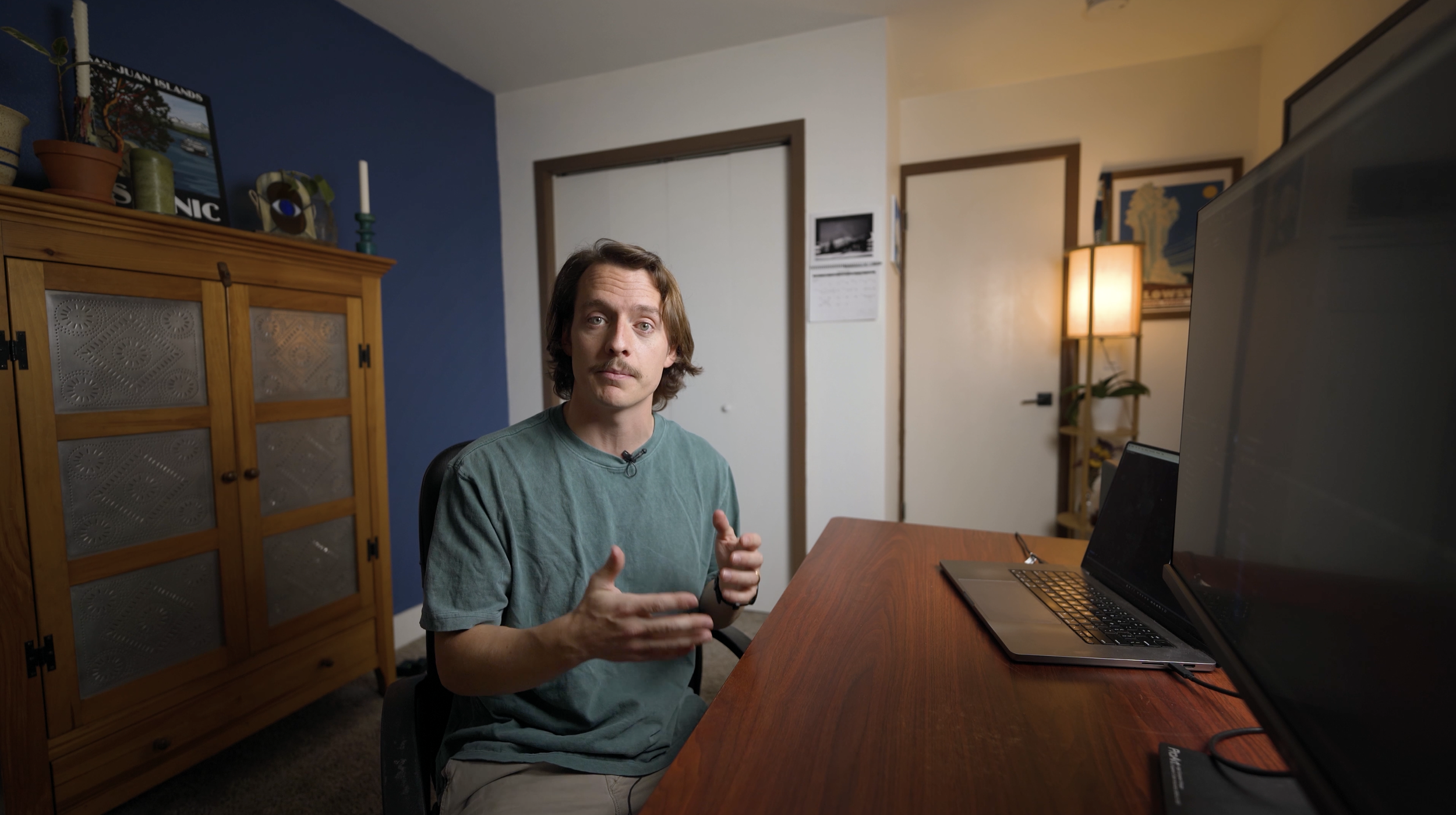
I’m Roo, a 3x Emmy-nominated commercial and documentary filmmaker based in Boulder. I work across industries, building the crew around the story and carrying projects from the first idea through the finished work. My branded documentary production page has more films and a closer look at that process.
Got a film in mind—and a few places for it to go?
Send me the idea, the person you’d love to film, or the slightly untidy list your team has started. We can figure out what belongs together and make a plan that still leaves room for a little discovery.
Say hello below. I’d love to hear what you’re thinking.